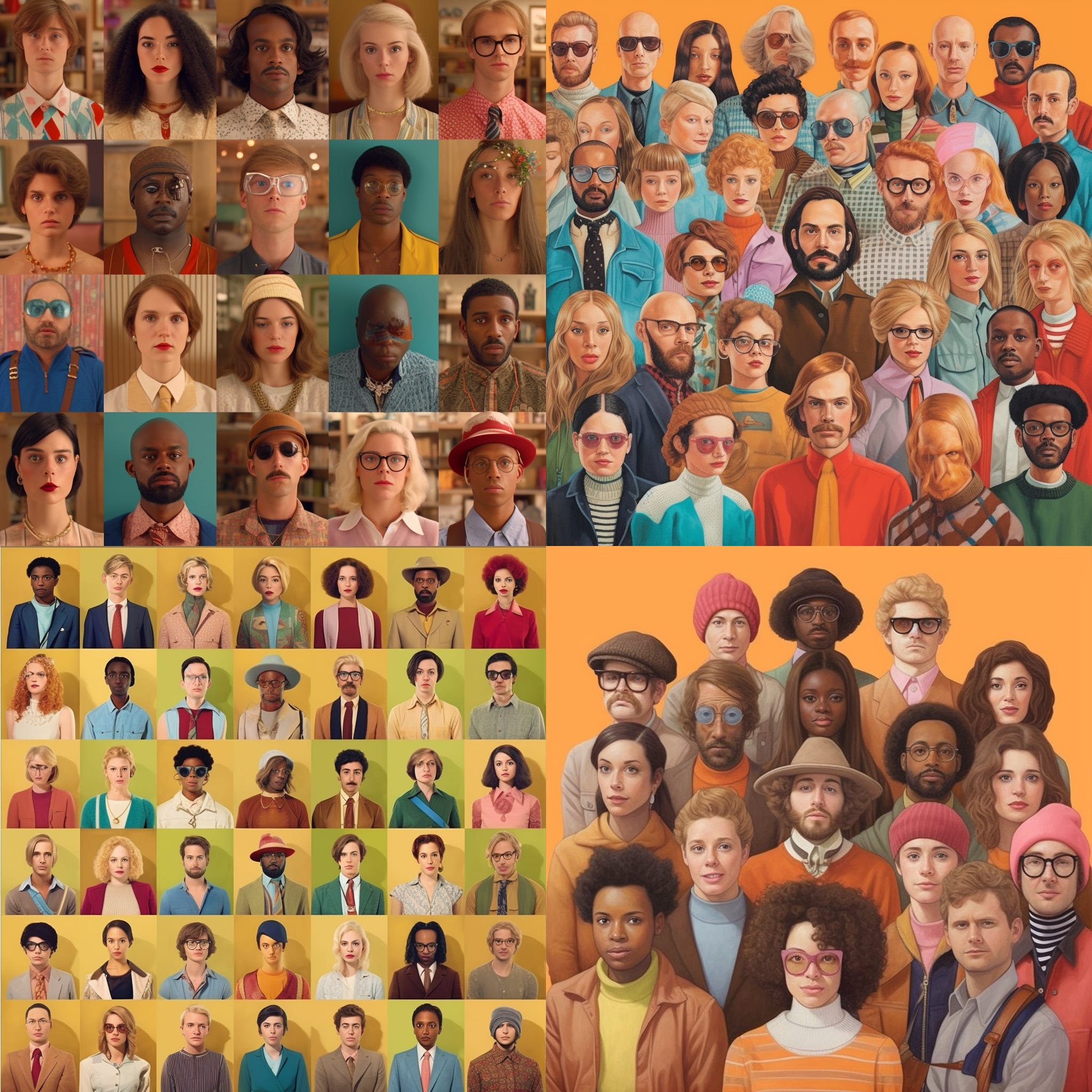
Prompt to Midjourney: “the Reign of Hackers, Hipsters and Hippies, crowds”
This week’s walk between the reign-drops… If you like it, and you want to help me keep making more of it, please do sign-up (or if already signed, Upgrade to Paid) at the button below. Many thx:
They’re always funny, the two philosophers that sit behind the name Hanzi Freinacht,and they’re often useful, in their search for an “ethos” for the current accelerating and complexifying age (I called it a Play Ethic twenty years ago, and they’re not far off that.)
These people are on average more progressive, more socially concerned and more aware of the dire environmental crises of the world. So if they are provided with the infrastructure and opportunities to prosper they can become a valuable asset for the overall level of societal progress.
And even if they often come off as arrogant and awfully politically correct to the traditional workers they live among, they are generally more engaged in their local community and willing to show greater amounts of sensitiveness and understanding towards their co-citizens than the bourgeois middle class people who have followed them into the old working-class neighborhoods.
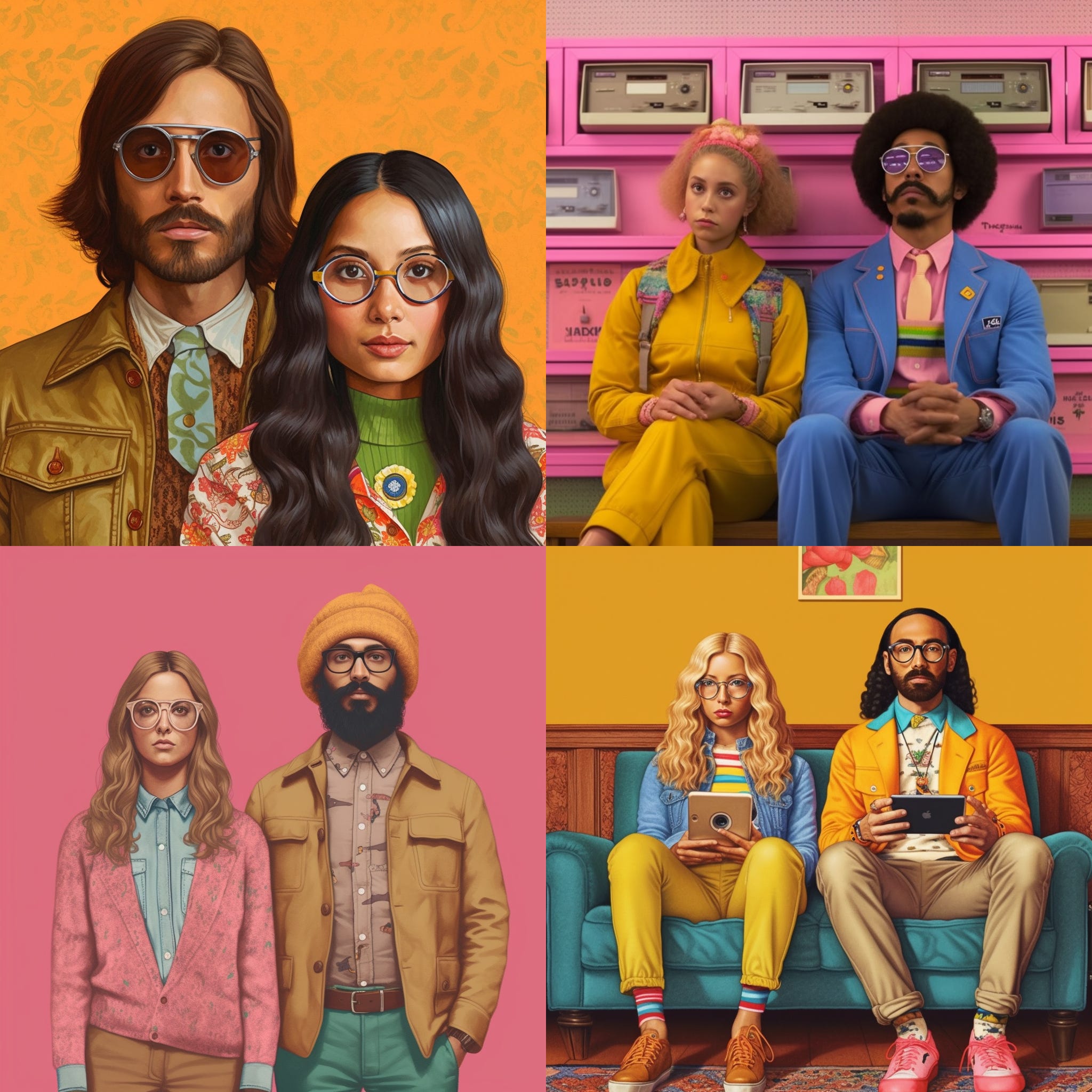
Prompt to Midjourney: “the Reign of Hackers, Hipsters and Hippies - couples”
They also tend to have a global mindset (which makes the co-existence with ethnic minorities from traditional cultures surprisingly friction-free despite the considerable differences in values and levels of cultural capital) and have more transnational perspectives on things.
As such they work to transform their countries (or cities, or regions) into nodes within a larger network where information is free, production of cultural goods is central, and creativity is paramount.
They seek to live in progressive and cultural vibrant pockets of transnational networks where they can partake in innovative IT-companies, public-private partnerships and different forms of social entrepreneurship and research programs, often working professionally with things such as open information, climate change and organizational democratization.
And the locations with the highest concentrations of these things thus achieve greater centrality in the new emerging transnational networks — with considerable advantages on the global stage as a result.
In short, the progressive and postmaterialist values of the triple-H people generally make them more concerned with the transition to an ecologically and socially sustainable society than making a buck to buy nice things.
It’s not that they are better than normal folks, but they are the ones to invent many of the things that could “save the world”. Because of that we should see to it that they get the optimal conditions to do so.
The rest of the piece does talk about the various resistances to and opponents of the triple-H’ers, which it strikes me that much of the right-wing media in UK and US are explicitly amassing. So what’s the encompassing community structure that might house both the triple-H’s and the left-behinds? That’s what we’re partly exploring how to achieve, week in week out, at the Alternative Global.
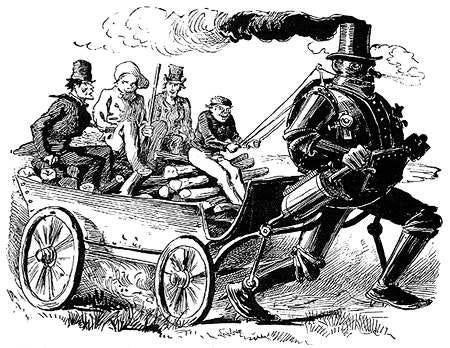
As Yuk Hui writes for the OECD, the speech that philosopher Henri Bergson gave at the start of WWI contains a warning about technology which resonates to this very AI-haunted day. [I leave the sexist terminology in, as it makes its own, cross-cutting point about those culpable for this state of affairs];
What would happen if the mechanical forces, which science had brought to a state of readiness for the service of man, should themselves take possession of man in order to make his nature material as their own?
What kind of a world would it be if this mechanism should seize the human race entire, and if the peoples, instead of raising themselves to a richer and more harmonious diversity, as persons may do, were to fall into the uniformity of things?
What kind of a society would that be which should mechanically obey a word of command mechanically transmitted; which should rule its science and its conscience in accordance therewith; and which should lose, along with the sense of justice, the power to discern between truth and falsehood?
What would mankind be when brute force should hold the place of moral force? What new barbarism, this time final, would arise from these conditions to stifle feeling, ideas, and the whole civilization of which the old barbarism contained the germ?
What would happen, in short, if the moral effort of humanity should turn in its tracks at the moment of attaining its goal, and if some diabolical contrivance should cause it to produce the mechanization of spirit instead of the spiritualization of matter?
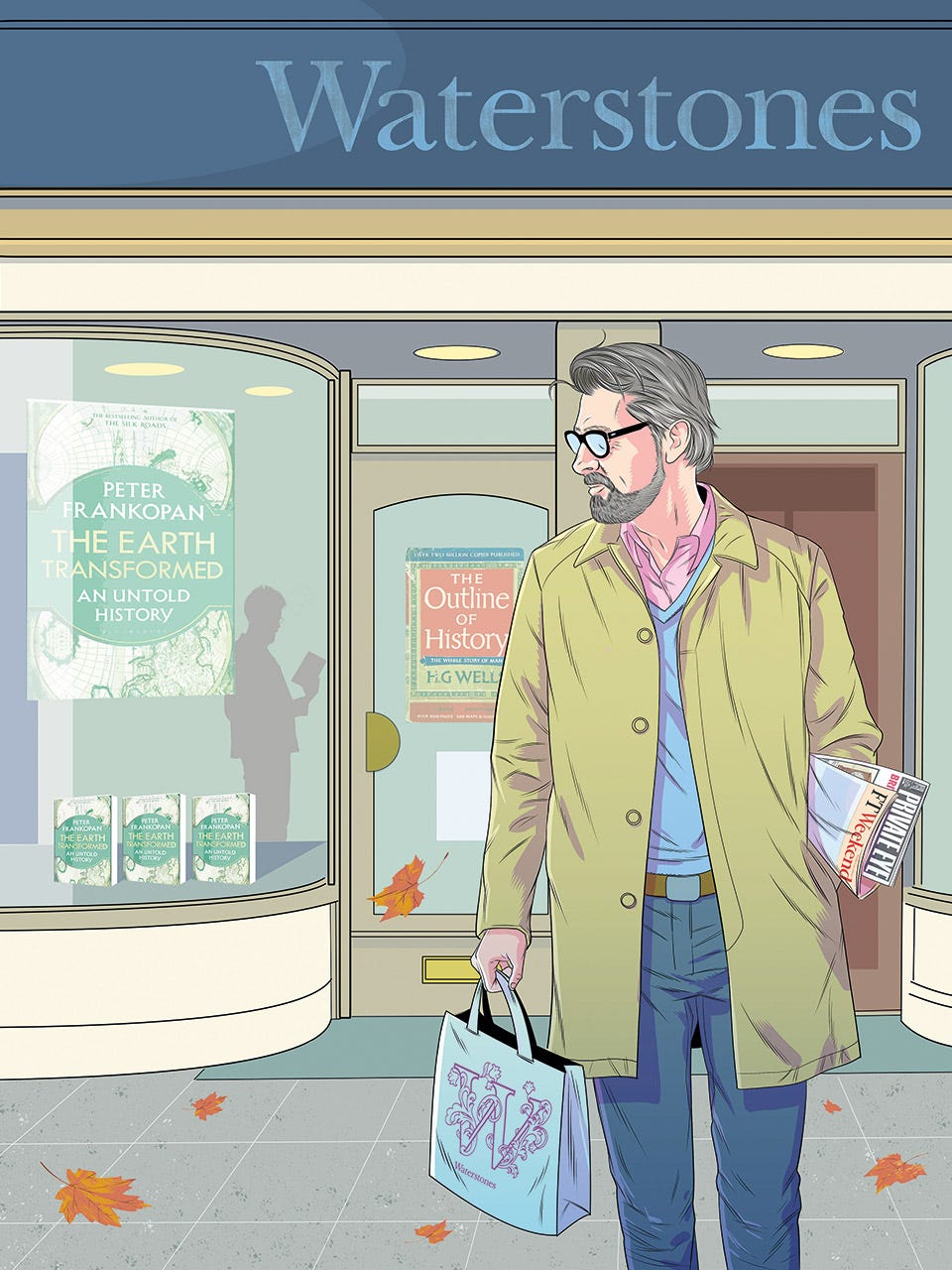
Waterstones Dad, even in the laziest tradition of social typology, is deeply unfair. An example:
If, in the mid-1990s, Mondeo Man was aspirational, upwardly mobile and optimistic about the future, Waterstones Dad is the self-made man undone. He is more despondent, politically confused, curious yet overwhelmed by choice, drained by hopes raised and dashed, but lashed to the mast of a career, a good house, and the comforts of family life. Like the tortured suburban souls in Garry Wills’s Nixon Agonistes, '“[he] has, in some minor way, ‘made it.’ And it all means nothing.”
My objection being that all the critical intellectuals that this writer contrasts to W-Dad’s exhausted choices - Tom Nairn, Adam Tooze, Kojo Koram, Caroline Elkins - are equally present on the shelves (at least the branches I frequent). Yuval Noah Harari is roughed up somewhat, as a predilection of W-Dad, but I say that’s unfair. My New Scientist review of Homo Deus from 2016 notes fistfuls of interesting questions raised—which, as each day passes, seem more like a route map than charlatanry. Finally, nothing bespeaks the return of Blairism (via Starmerism) than cultural snobbery fuelled by limp sociology. A new Modern Review, anyone? Thought not.
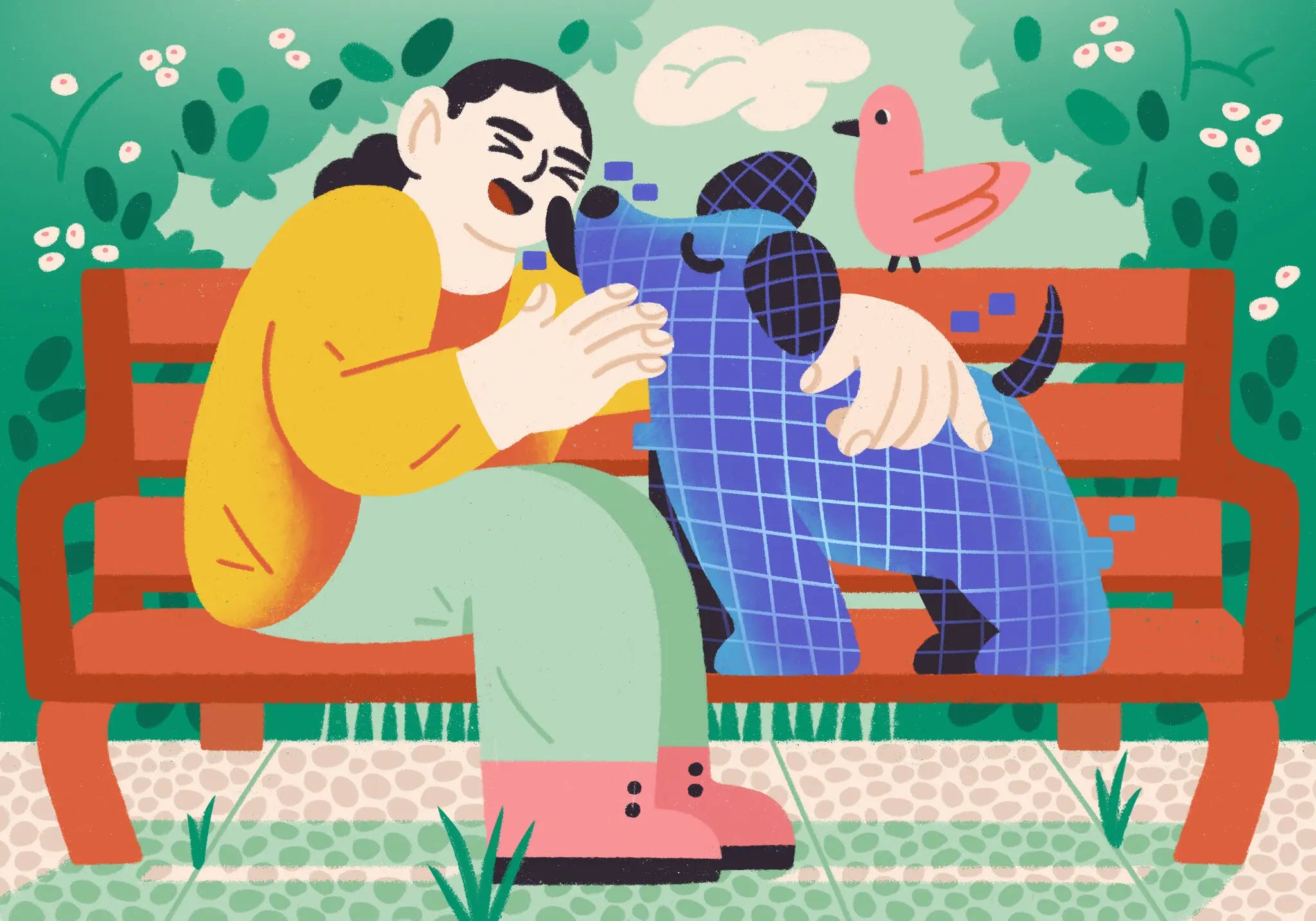
Spooky. I wrote in one of my National columns recently how my calm, steady intellectual encounters with GPT-4 were the kind of non-aggressive exchanges of ideas and opinions I’d craved all my life, and certainly better than the normative chop-downs of my formative years.
And, lo and behold, there’s a new LLM AI app for that exact mood/mode! Brought to you by the (biographically fascinating) co-founder of Deep Mind, Mustafa Suleyman, it’s called Pi. I tried it for about 15 minutes, and got exhausted with its semi-therapeutic questioning. But here is Mustafa’s hopes for it:
It is too easy to take for granted that, you know, everybody has access to kindness and care. That is a privilege to have a family member or a best friend or a partner who asks you about how your day was and gives you support when you are trying to make a difficult decision and when you are sort of struggling and when you’re down. Not everybody has that. I think it’s going to be pretty incredible to imagine what people do with being shown reliable, ever-present, patient, non-judgmental, kindness and support, always on tap in their life.
Even a shilpit-cyborg like me has alarm buttons flashing at this. Obvious rejoinder: if we manage a political economy which uses AI’s cognitive productivity to give us financial support and more free time, why should it be a “privilege” to be at the centre of a nest of good relationships? What if having time and energy to develop those becomes one element of our new normal - post-automation, post-consumerism?
I speak feelingly here. As the start of this snippet shows, if you’re looking for someone addictively susceptible to AE (artificial equanimity), I’ll be yir man.
Scrapings from the Triple-H Table:
🗽“In 1989, US was the principal exporter of democracy in the world. Today, the US is the principal exporter of tools that destroy democracy” [TED Talk by Ian Bremner on algorithmic imperialism]
👹A very bracing Tweet-thread on “what is ignored by the media—but will be studied by historians?” No. 2 is something else: “Since 2010, the media massively increased headlines that use fear, anger, disgust, and sadness… Why has the media become more negative? ‘Blended study of 105,000 headlines and 370 million impressions concludes each additional negative word [in a headline] increased the click-through rate by 2.3%’". From the paper reported on here.
🪯 Stunning story on how Amritsar, as the centre of Sikhism, ensures than none of its inhabitants goes hungry [BBC]
Ok beloveds, that’s the chamber empty. Once again, if you like this trends-letter, please consider directly supporting me to make it happen, on an “upgrade to paid” basis. You are supporting independent minds on an independent platform! Best, love on ya, PK xx
E2: The Future (& Scotland Too) is a reader-supported publication. To receive new posts and support my work, consider becoming a free or paid subscriber.
Another very interesting read. As a Dad in my early 60s the Waterstones piece was very engaging. The triple H are obviously annoying the Right. News media I only see headlines in the newspapers in the Convenience store I work in. Never read them also online as they are clickbait and all lies. Keep up the interesting work. I am spending more time on A stack and other online forums because of your work.


Another very interesting read. As a Dad in my early 60s the Waterstones piece was very engaging. The triple H are obviously annoying the Right. News media I only see headlines in the newspapers in the Convenience store I work in. Never read them also online as they are clickbait and all lies. Keep up the interesting work. I am spending more time on A stack and other online forums because of your work.