
SUPERPLAY 1.2: Imagination, metacognition and human play
Next part in this beta-book project

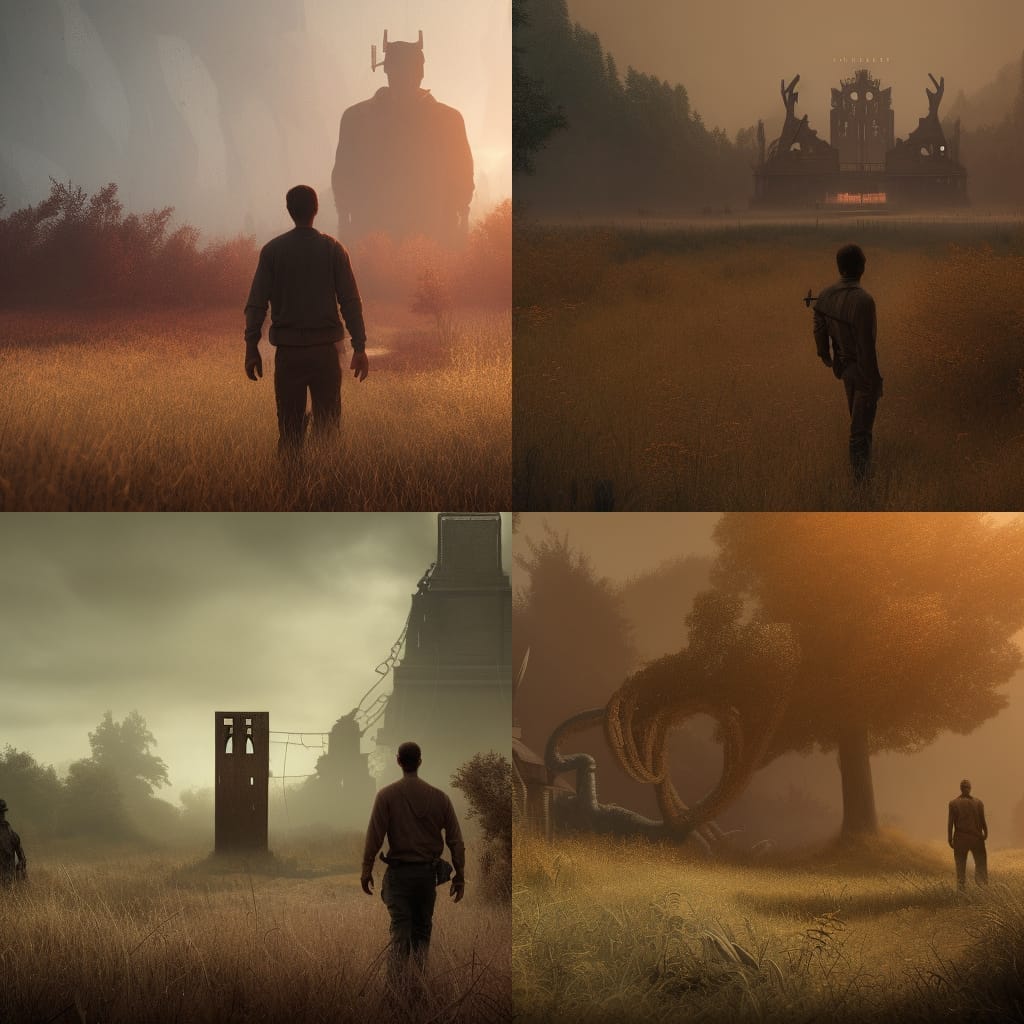
Welcome to the next installment of my beta-book follow-up to 2004’s The Play Ethic, provisionally entitled SUPERPLAY: This Is Not A Rehearsal. Here’s the archive of previous parts/chapters, and hotlinks to the early book plan are below.
I’m starting and sustaining this myself, so each post will hit a paywall at some point in the text. I hope you can support SUPERPLAY, with the monthly, yearly or Founding Member options. For this, you’ll get the final book (with your name in it), access to comments and chats.
In advance, thank you!—PK
BOOK PLAN
INTRO [free]
PART ONE: THE PLAY WE WERE
Evolution lets us play - but why? Rehearsal and new ideas [£]
Imagination, metacognition and human play [£]
From Play into SUPERPLAY - for the highest stakes [£]
1.2 Imagination, metacognition and human play
As sapient, modern humans, we have already begun to prioritise one of play’s two primary functions: the generation of new ideas, helping us probe for new niches where we can flourish (as much as the safe and pleasurable rehearsal of strategies for survival). The claim that we are in an era of Superplay rests on this notion: these “new ideas” are more speedily and comprehensively realisable than at any previous point in human history.
This has become an existential challenge, both risk-laden and promising. Our play-generated ideas can easily turn into reality—and sometimes threaten to end us. Why does “playing with” gene-editing or molecular engineering, artificial intelligences or robotic agents, seem so scary? Where are we if a game-theory informed, nuclear-armed military stand-off results in a cataclysmic misreading of your antagonist’s motive? And faced with an ecological need to reduce the material throughput caused by consumerism, will we be able to wind down (and repurpose) the playful desire machines of advertising and marketing?
Yet on the promising side: what if Huizinga’s “influx of mind into matter” generates a healing and supportive sci-tech - bringing relief from suffering, planet-replenishing energy, new computational (and biological?) companions and allies? What if we can imagine a world politics that proceeds by non-zero-sum calculations, rather than win-lose? What if our digital entertainments deeply, rather than cheaply, answered our longings and aspirations?
A Superplay that ascends from Toby Ord’s “precipice”, instead of tumbling over and into it, needs to be rooted (to my mind) in a detailed understanding of human creativity - its persistence and dynamics. We have to accept, to a considerable degree, that we are fated to be creative and imaginative with the possibilities of life. Optionality is our human condition.
We can feel this condition if we dive deeply enough into the mind/brain sciences–and particularly if we note the overlaps between their research into imagination, metacognition and human play.
Imagination is perhaps as readily graspable as play: we know when we’re doing both of them. But imagination has also become as scientifically compelling a behaviour as play - largely because they both showcase the flexibility and dynamism of the human brain.
In his essays for Aeon magazine, Stephen Asma makes big claims that the mind/brain sciences have historically downgraded the importance of imagination. The stories, vision and symbols that comprise our imagination aren’t just cool and abstract - they grip us, engage our emotions implicitly and intrinsically.
“Mythopoetic” is Asma’s favourite coinage. But the clearest distinction he makes is that imagination is imperative, rather than just indicative:
Images, objects and rituals of mythopoetic cognition are imperative rather than indicative. If we’re immersed, then a dance performance, novel, film drama or religious ritual does not need decoding because our emotional entanglement makes us immediately angry, melancholy, hopeful, resigned, confused, and so on.
Emotional contagion (and motor cortex contagion) means the representation is also the thing itself. We can see this most clearly perhaps in first-person gaming and VR immersion scenarios, but also in plays such as Euripides’ The Bacchae or Edward Albee’s Who’s Afraid of Virginia Woolf? (1962) – or, better yet, the time-honoured tradition of hearing a ghost story around a campfire.
Stories and images don’t just describe the world, they inspire action in the world. They depict but also push our emotions in specific directions. They motivate us, rather than just label, organise and model the world. In this view, a factual description of the world comes after our embodied imaginative interaction with the social world.
(This is clearly a powerful feed into my notion of Superplay - that it accesses motivational and emotional systems, producing a strongly felt drive towards making the “new idea” real and substantive.)
As you can see from the passage above, Asma grasps metacognition (understood as self-awareness and reflective thinking) and strict rationality, and puts it in a particular place - as coming after the engagement, indeed the physical gratifications and stimulations, of imagination. Elsewhere in his “imaginology” essay, he proposes a sequence whereby imagination operates, drawing on varying brain components.
First, mirror neurons fire, imitating the activity witnessed. Then our language and symbolic cognition steps in - “decoupling” those experiences from their context. This material is then compared, in its novelty, to our existing expectations of reality. Asma takes it further:
In this way, imagination does not just redescribe a world, but regularly makes a new world… From birth, our minds are awash in stories and images, but we also view ‘real life’ largely through imaginative constructions that are rarely acknowledged. Imaginative cognitions can happen in parallel with real-time perception (forming a co-present) or they can decouple and run offline before and after real-time perception.
This means that humans simultaneously experience a real ‘now’ and an imaginal ‘second universe’ but, phenomenologically, they are combined in present experience. Occasionally, this leads to epistemic slippage and confusion, like conspiracy thinking, but usually imagination makes humans more awake to the potentials in lived experience.
Popular culture recognises only the fantasy version of artistic imagination and fails to appreciate that everyday conversation, daydreaming, map navigation, political strategizing, scientific hypothesising, moral reflection, field surgery, cooking, reading and lovemaking are all imaginative activities, too.
This capacity for producing umwelten, “this world-making ability of imagination” (Asma), helps us to understand the current predicament of human play in the first half of the twenty-first century. What if our incessant world-making–as played out and played with beyond our heads, materially and practically–leads to our world-breaking?
Being “more awake to the potentials in lived experience” does not exclude the tactical usage of field nuclear or biological weapons, “imagined” as targeting only the hated other. Nor does it automatically prevent the seductive greenwashing of a brand campaign, as it masks an industry’s deep structural collusion in the disruption of the biosphere.
In short, imagination (and play) hardly express their own virtue automatically. We’ll particularly focus on this in chapters to come. Asma describes a “slippage” between our experiences of “now”, and our “second universe”. But this slippage can also be caused by a deliberate unmooring of our heads, made by strategic malefactors. An active fomenting of conspiracy-thinking and demonisation; “worldings” crafted by political technologists.
But the point (of my writings here, at least) is to clarify how we might progressively respond to such conditions and stratagems–not how we must inevitably surrender to those with the most mind-and-heart-shaping powers. A counter-worlding that is friendly to planet and equality might be difficult to construct. However, we should certainly be fundamentally encouraged that we, the people, could do so—especially if we give credence to these scientific accounts of the creative, constitutive power of human brains (and bodies).
Easy, of course, to be discouraged, given the sheer tonnage of human misery and cruelty around us, past and present. A Superplay—aiming to develop enough motivational maturity to steer our powers of realisable imagination, in ways that are not inevitably self-terminating—has enough to work on.
In the current year-end edition of the Economist, artist Brian Eno rightly states that “art is where we go to experience things safely… We can immerse ourselves in other worlds and the feelings they arouse without risking our lives and our health. Children do this when they learn through play to see how things work. Adults play through art.”
In that spirit, and to conclude this section, I’ll share a piece of adult play (or art) that expresses the most difficult question of our species-being, our core human nature, that any Superplay could address.
The scene is from a 2014 HBO series called True Detective (clip embedded above, and part of the prompt to the generative AI at the head of the blog). Two American cops sit in their vast car, arrowing down a horizon-bound road, raising dust. They’ve witnessed the aftermath of a ritualised murder. They are brooding quietly, but not equally. Marty Hart (Woody Harrelson) has an open slab of a face, which is struggling with the human endpoint he’s just seen. Marty is trying to engage his steel-cold partner, hoping to relieve the pressure of his own horror.
Rust Kohle – yes, the names are emblematic – has been gnomic and near-mute for a month (he’s played by Matthew McConaughey). As Marty presses a question about religion and belief, Rust gazes out of the car window and unfurls the following cosmic paragraph:
I think human consciousness is a tragic misstep in evolution. We became too self-aware: nature created an aspect of nature separate from itself. We are creatures that should not exist by natural law. We are things that labour under the illusion of having a self; an accretion of sensory experience and feeling, programmed with total assurance that we are each somebody, when in fact everybody is nobody. Maybe the honourable thing for our species to do is deny our programming, stop reproducing, walk hand in hand into extinction, one last midnight… Brothers and sisters opting out of a raw deal.
They continue down the road, Rust steadily nihilising (about the taste of “ash and aluminium in the psychosphere”), Marty regretting he ever asked Rust anything (“now all I want you to do is to shut the fuck up”).
There are scores of websites dedicated to Rust’s philosophical musings, which are laced through the first series of True Detective. The show’s originator, Nic Pizzolato, cites the modern gothic writer and philosopher Thomas Ligotti’s The Conspiracy Against The Human Race as an inspiration, as well as other nihilist philosophers like Eugene Thacker and E.M. Cioran.1
For me, this fragment captures our least admissible suspicion about human creativity: that it generates too much disruption and upheaval for its sapient generators to cope with, never mind benefit from. It’s one way to be reminded of the challenges that stand before a Superplay.
Matt Patches, ‘Ask a Philosopher: What’s Up With True Detective’s Rust Cohle?’, Vulture, Feb 28th 2014 https://www.vulture.com/2014/02/philosopher-assesses-true-detective-characters-rust-cohle-marty-hart.html Also Micheal Caila, ‘Writer Nic Pizzolatto on Thomas Ligotti and the Weird Secrets of True Detective’, Wall Street Journal, Feb 2nd 2014, https://web.archive.org/web/20151105224648/https://www.wsj.com/articles/BL-SEB-79577
Great stuff. Reminds me of a definition of Inspiration - motivational state that compels us to bring ideas into fruition. “Compels” being key. When we are inspired we have to do something about it. Inspiration bridges the gap between the world of imagination and the real world.
In a lighter note: here is a nice example of messy play being both fun and beneficial: https://www.fastcompany.com/90802934/the-sloomoo-institute-is-a-slime-mecca-designed-for-dirtying-your-hands-and-soothing-your-brain